Hours: Mon & Thu 9:30–7 · Tue & Fri 8:30–6 · Wed/Sat/Sun Closed
(908) 771-0220
Sports Rehabilitation
A disc injury does not have to end a sports career — but the return-to-sport process requires precision, not optimism.
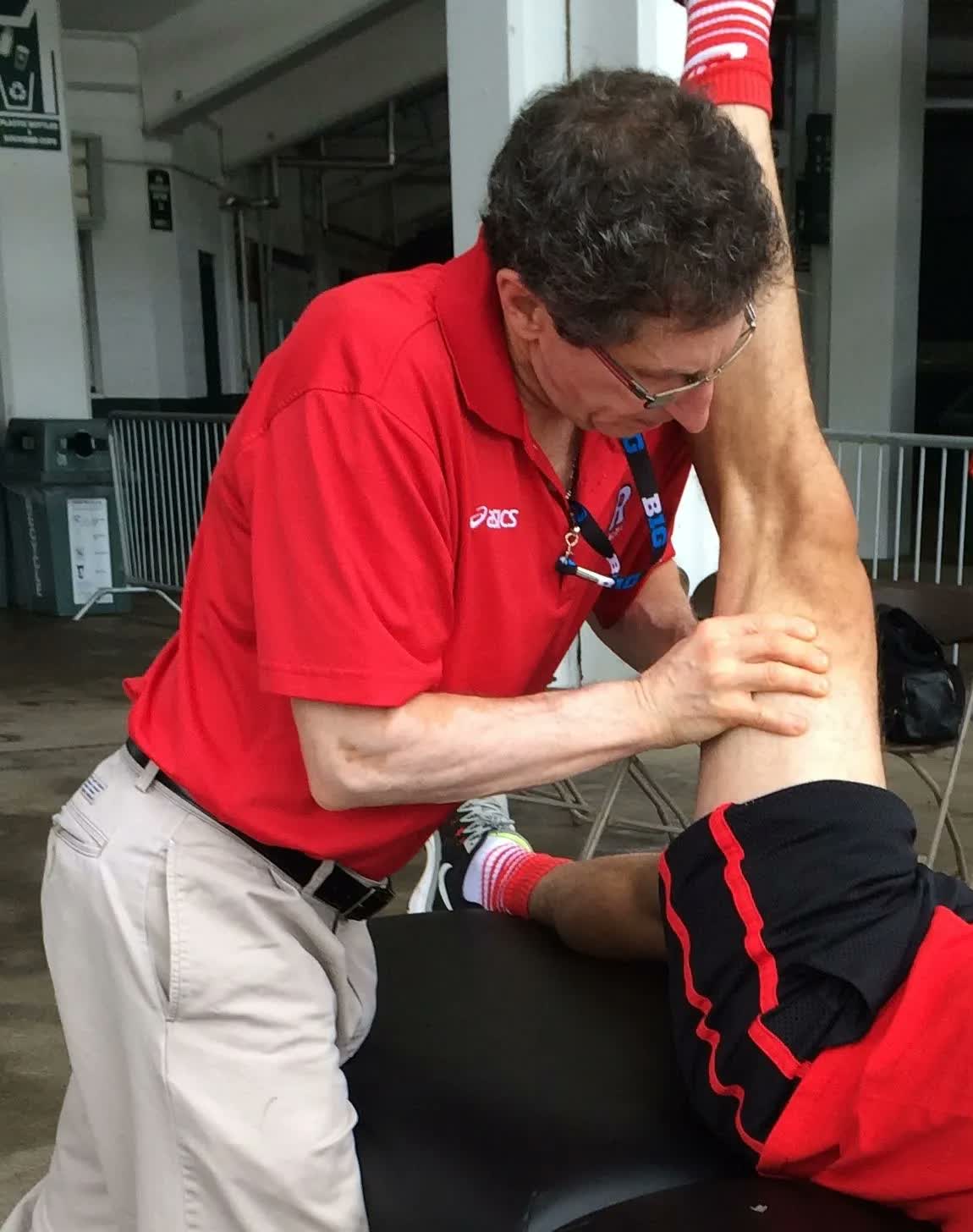
A lumbar disc herniation in a competitive athlete produces a particular kind of urgency. The athlete wants to know one thing: when can I get back? The answer depends on factors that are often glossed over in the rush to return — which is why re-injury rates after disc injury in athletes are unacceptably high when the return-to-sport process is managed by timelines rather than criteria.
The lumbar intervertebral disc has a fibrous outer ring (annulus fibrosus) and a gel-like inner nucleus (nucleus pulposus). Under sufficient compressive load, torsional stress, or repetitive flexion, the annular fibers can tear — allowing the nucleus to bulge toward or through the outer wall, where it may contact or compress an adjacent nerve root.
In athletes, disc injuries tend to occur with predictable mechanisms: repeated heavy axial loading (weightlifters, offensive linemen), combined flexion and rotation (golfers, baseball hitters, wrestlers), or sustained end-range spinal loading (cyclists, rowers). Understanding the mechanism is essential to designing both the rehabilitation protocol and the sport-specific return progression.
In the acute phase, the priority is reducing nerve root irritation while maintaining as much movement as possible. Extended bed rest is not indicated. Patients are guided through positions of comfort, gentle neural mobilization, and movements that centralize radicular symptoms — the McKenzie method provides a validated framework for this. Spinal decompression therapy, when appropriate for the presentation, begins reducing intradiscal pressure early in the recovery.
Training modification rather than total cessation is the goal. Upper body work, low-impact conditioning, and pain-free movement are maintained throughout when the injury permits.
Once radicular symptoms are centralizing and nerve irritation is decreasing — typically weeks 2 through 6 — the focus shifts to stabilization. This is where many athletes make the critical error: returning to training before the stabilizing musculature has been systematically rebuilt.
After a disc injury, multifidus — the deep spinal stabilizer most directly responsible for segmental vertebral control — loses motor activation rapidly. EMG studies show measurable inhibition within days of disc injury, and this inhibition does not self-correct when the pain resolves. The pain goes away; the motor control deficit persists. Athletes who return to competition before addressing multifidus inhibition are loading a spine that lacks the neuromuscular armor it needs.
The subacute rehabilitation program addresses this directly: deep segmental stabilization exercises, progressive hip and gluteal strengthening, and movement pattern re-education to reduce spinal flexion load during sport-specific movements.
Return-to-sport clearance requires meeting objective criteria — not simply reaching a date on the calendar:
The final criterion is non-negotiable: the athlete must perform their sport's actual movement demands without pain before being cleared. An offensive lineman must drive block. A pitcher must throw at full velocity. Clearance based on the clinic visit alone is insufficient.
An athlete who has sustained a lumbar disc injury does not return to exactly what they were doing before — not immediately, and sometimes not ever in precisely the same form. Load management, movement modification, and ongoing maintenance care are part of the long-term picture for high-demand athletes. This is not a failure of treatment; it is the reality of managing a structural change in a tissue with limited regenerative capacity.
What changes on the positive side: athletes who go through a properly structured rehabilitation and return-to-sport process often develop significantly better neuromuscular control and spinal stability than they had before the injury. The injury becomes the inflection point for a more durable athletic career — when it is managed correctly.
Dr. Donald DeFabio has worked with athletes at the national and international level. Schedule an evaluation at DeFabio Chiropractic in Berkeley Heights, NJ.